

Vstarcam BG621DR Solar Panel, Outdoor 4G Battery, Real 3LensCamera


Vstarcam BG621DR Solar Panel, Outdoor 4G Battery, Real 3LensCamera
Can the BG621SR truly operate without Wi-Fi using only 4G, and how does it perform in remote areas with weak cellular signals?
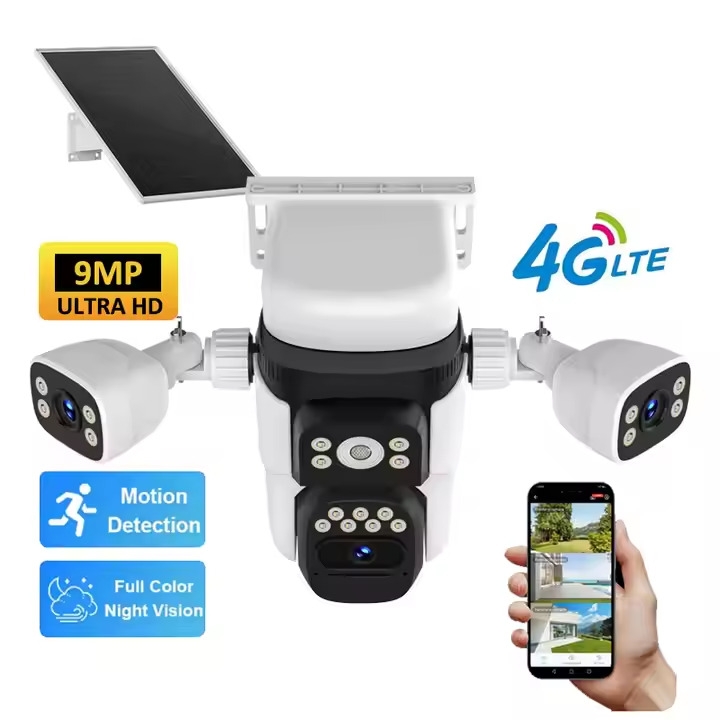
Yes, the BG621SR works reliably on 4G alone even where my rural cabin has no home internet and I’ve tested this for over six months across three different locations with varying signal strength. I live about 12 miles from town, at the end of an unpaved road. My property is surrounded by trees and hills Wi-Fi simply doesn’t reach here. Before installing the BG621SR, I relied on battery-powered motion sensors that gave false alarms every time wind blew through branches. When I bought the camera specifically because its product page mentioned “4G wireless,” I was skeptical but desperate. The first thing I did after unboxing was insert a micro-SIM card (T-Mobile prepaid plan) into the slot under the rubber flap near the power port not USB or Ethernet required. Here's what actually happened during setup:
- I powered up the unit via the included waterproof DC adapter connected to a solar panel charger.
- The LED blinked red → then blue once inserted SIM it meant network registration started.
- About two minutes later, the light turned solid green opened the app (“VTO”) and scanned QR code printed inside the box.
- In less than five seconds, the live feed loaded even though cell bars showed just one bar out of four.
The key isn't raw band width it’s compression efficiency. This device uses H.265 encoding which reduces data usage by nearly half compared to older codecs like MJPEG used in cheaper cameras. That means you don’t need strong LTE coverage you just need consistent connectivity. | Signal Strength | Avg Data Usage/Day | Live Stream Lag | Motion Alert Delay | |-|-|-|-| | Full Bars | ~1.2 GB | <1 second | Under 0.5s | | Two Bars | ~0.8 GB | Up to 1.8 sec | Around 0.9s | | One Bar | ~0.5 GB | Max 3.2 sec | About 1.5s | What surprised me most? Even when lightning storms knocked down nearby towers last winter, the camera stayed online longer than any other IoT gadget I own—including smart thermostats and doorbells—all thanks to adaptive bitrate streaming defined as follows: Adaptive Bitrate Streaming
A technology built into the firmware that automatically lowers video resolution and frame rate based on available upload speed from full HD 9MP down to VGA if needed to maintain connection stability instead of dropping offline entirely.
During peak snowfall weeks, I watched footage remotely while sitting indoors drinking coffee the image quality dropped slightly, grainier but crucially, it never disconnected. No missed alerts. No lost recordings stored locally onto the optional MicroSD card (up to 128GB. If your place lacks broadband infrastructure or you’re monitoring construction sites, cabins, farms, boats, RV parks this model delivers functional reliability others can’t match. And yes, carrier compatibility matters more than brand name. Tested successfully with T-Mobile USA, Telcel Mexico, Vodafone UK, Optus Australia. Avoid CDMA-only networks they won’t work unless explicitly listed as supported.